Blog · Storage
How to Store Mint: Fridge, Freezer and Drying, With What Sources Actually Say
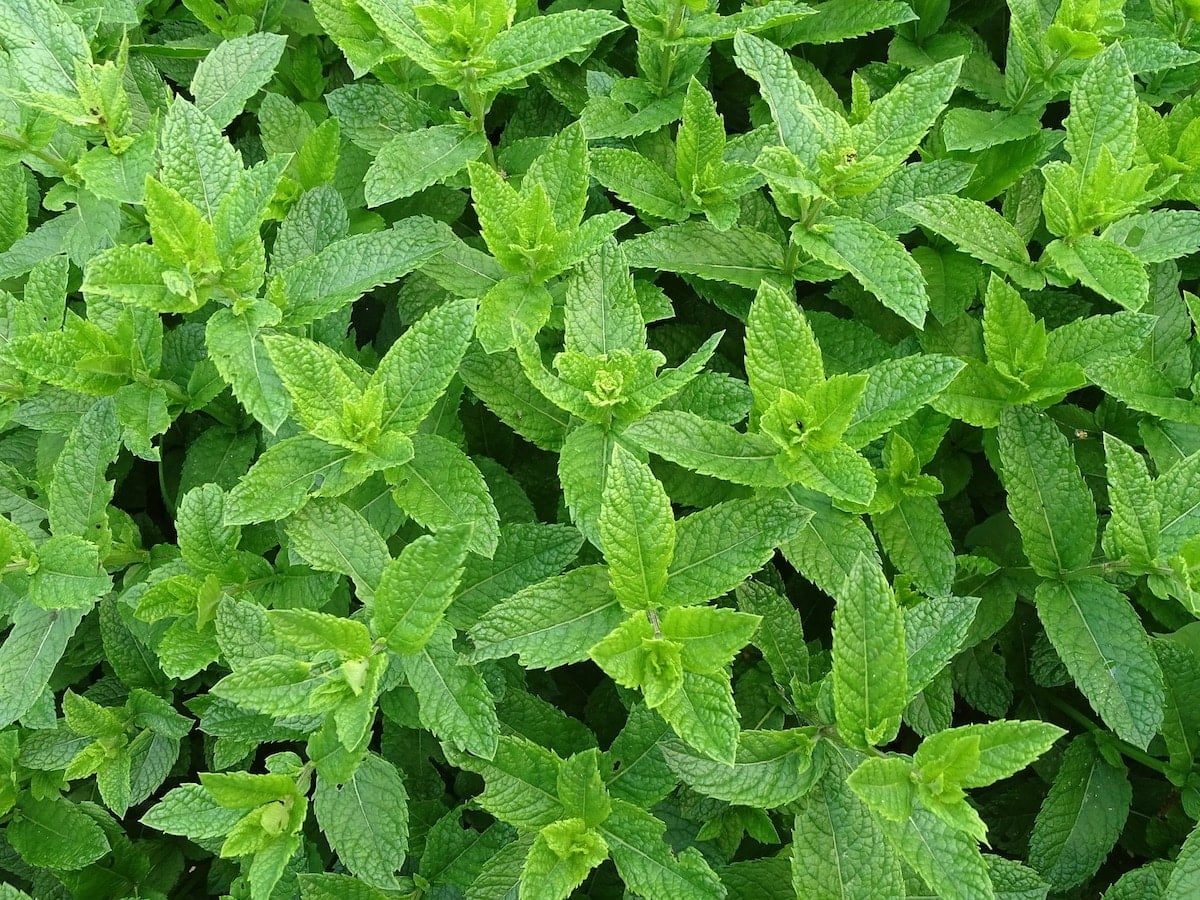
Mint is one of the delicate, soft-leaved herbs, and it’s one cooks generally want fresh: America’s Test Kitchen lists it among the herbs that are better fresh than dried.1 To keep it fresh as long as you can, wrap it in slightly damp paper towels, tuck it into an open bag and refrigerate it, then freeze or dry whatever you can’t use in time. Be wary of the day counts you’ll see for mint (“two weeks”, “several weeks”). Most don’t trace back to any source we could find.
At a glance
| Question | Short answer |
|---|---|
| Refrigerator method | Wrap in slightly damp paper towels, put in an open zipper-lock bag, refrigerate.2 |
| Wash first? | Sources differ. The Government of Canada says store fresh herbs unwashed.3 |
| How long in the fridge | Up to five days for fresh herbs in general, per the Government of Canada.3 Commercial cold storage at 0°C (32°F) can reach 3 weeks.4 |
| Keep away from | Ethylene. UC Davis lists mint as very sensitive to it.4 |
| Freezer | Mint freezes well, per Penn State.5 Frozen leaves go limp, so use them in cooking, not as garnish.5 |
| Drying | Dry it quickly: mint is a high-moisture herb that molds if it dries slowly.6 |
| Dried mint, how long | About 1 year to 1 to 3 years for dried herbs in general, depending on the source. None measured mint. |
| Mint in oil | Refrigerate and use within 4 days, or freeze.7 |
Keeping fresh mint in the refrigerator
America’s Test Kitchen sorts herbs into hearty and delicate. Delicate herbs take in and give off a lot of water, so they have to stay moist or they wilt. But they shouldn’t touch liquid, ATK warns, because that encourages rot. Its method for delicate herbs: wrap them in slightly damp paper towels, put them in an open zipper-lock bag, and refrigerate. In the same guide, a slim herb keeper with a vented lid kept herbs fresh longer than the other containers ATK tested.2
The Government of Canada’s food-safety advice is to store fresh herbs unwashed, trim the stalk ends, put them in a resealable plastic bag and keep them in the crisper for up to five days, then rinse them under cool running water when you use them.3 That’s general advice for fresh herbs, not a mint test.
Standing mint in a glass of water. Keeping mint like cut flowers, stems in an inch of water with a bag over the top, is a popular tip. We found no named source that tested it for mint or gives a time for it. The closest sourced guidance is ATK’s warning about delicate herbs touching liquid, and that points the other way.2
Ethylene. UC Davis’s postharvest fact sheet on fresh culinary herbs lists mint among the herbs that are very sensitive to ethylene, and the main signs are yellowing, curving stems and dropping leaves.4 The fact sheet is written for growers and shippers and doesn’t give home advice. It doesn’t say which foods to keep mint away from, so we won’t guess at a list.
How long it lasts. Here are the named numbers we found:
| Source | Scope | Figure |
|---|---|---|
| Government of Canada3 | Fresh herbs in general, home crisper drawer | up to 5 days |
| UC Davis Postharvest Center4 | Most fresh herbs in commercial storage, above 95% humidity | 3 weeks at 0°C (32°F); 2 weeks at 5°C (41°F) |
They aren’t measuring the same thing. The UC Davis numbers assume near-freezing, very humid commercial storage, while the Canadian one is a food-safety rule of thumb for a home fridge. UC Davis also notes that herbs’ essential oils and aroma generally drop in storage, so even mint that looks fine has lost some flavor.4
Freezing mint
Mint freezes well, according to Penn State Extension. Its methods:
- Ice cubes. Chop the leaves. Half-fill an ice cube tray with water, put about a tablespoon of herbs in each section, freeze, then top up with water the next day once the cubes are solid. Keep the finished cubes in a freezer bag.
- Loose leaves. Strip the leaves off the stems, spread them in a single layer on a cookie sheet and freeze, then move them to a freezer bag so you can take out only what you need.
- In oil. Mix about 1/3 to 1/2 cup of oil with 2 cups of chopped herbs and freeze in ice cube trays or small jars. Penn State is firm about this: add oil only if the herbs are going in the freezer, and never keep herbs in oil at room temperature.5 Herbs frozen in oil keep their color better than herbs frozen on their own.
Before freezing, rinse the herbs and pat or spin them dry without crushing them. You can use frozen herbs in the same amounts as fresh, and they should go into cooked dishes without thawing first. Freezing makes the water in the leaves expand, so they’re limp when thawed and generally don’t make pretty garnishes. Penn State also notes that herbs give off smells that other foods in the freezer can pick up.5
We couldn’t find a published number for how long frozen mint keeps its flavor. The “several months” you’ll often see quoted has no traceable source.
Drying mint
Dry it fast. NCHFP and Penn State both put mint in the high-moisture group with basil, tarragon and lemon balm. These herbs mold if they don’t dry quickly.6 NCHFP suggests drying mint leaves separately, off the stem, as a method that suits mint especially well. For air-drying, keep the bunches small, since big ones mold, and hang them inside a paper bag with holes torn or punched in the sides.6
Dehydrator. The sources give slightly different temperatures for herbs:
| Source | Dehydrator setting | Time |
|---|---|---|
| NCHFP6 | 95°F to 115°F; as high as 125°F in humid areas | 1 to 4 hours |
| Penn State8 | 95°F to 110°F | not given |
Neither is a mint-specific setting. The 90°F you’ll often see quoted is below both ranges.
Microwave. Times vary by source, and none of them names mint:
| Source | Method |
|---|---|
| Penn State8 | Herbs in one layer between microwave-safe paper towels; start with 1 minute on high, mix every 30 seconds, check for dryness. About 2 to 3 minutes per cup. |
| America’s Test Kitchen, hearty herbs2 | Single layer between two paper towels, 1 to 3 minutes on high, until leaves are brittle and fall off the stems. |
| America’s Test Kitchen, 20221 | Microwave for 30 to 40 seconds. |
Penn State warns that the paper towels can catch fire if there’s too little in the microwave, and that a microwave rated at 1,000 watts or more may heat too fast for this method.8 Its list of herbs that dry well in some microwaves is parsley, basil and celery leaves. Mint isn’t on it.8 Watch the herbs closely.
Oven. Penn State doesn’t recommend oven drying, because even the lowest setting destroys much of the flavor. If you do it anyway, stay at or below 180°F (82°C) for 3 to 4 hours with the oven door open.8
Done when. The leaves are crisp and crumble easily between your fingers. More detail is in how to dry mint.
Storing dried mint
Keep dried mint in airtight containers somewhere cool, dry and dark. Leave the leaves whole and crumble them when you cook. Whole herbs hold their oils and flavor longer, Penn State says.8 Air, light, moisture and heat all speed up the loss of flavor and color in dried herbs.
| Source | What it covers | Figure |
|---|---|---|
| UC Cooperative Extension, 20029 | Ground spices and dried herbs, home storage | 1 year |
| America’s Test Kitchen10 | Ground spices and dried herbs | 1 year |
| Penn State Extension11 | Most dried herbs | about 1 year |
| America’s Test Kitchen, 20221 | Herbs dried at home in the microwave, airtight | up to 3 months |
| McCormick12 | Leafy herbs and most seasoning blends; a spice company’s own guidance | 1 to 3 years |
None of these was measured on mint, and they disagree, so don’t average them. To check dried mint, crumble a little and smell it.
How much dried should you use in place of fresh? Ratio (Attributed): America’s Test Kitchen found 1 part dried to 3 parts fresh came closest on flavor.13 But ATK also says delicate herbs like mint get much weaker once dried,1 so dried mint isn’t a straight swap in dishes built on fresh leaves.
Mint in oil
Herbs in oil can cause botulism. Herbs are low-acid foods that can carry Clostridium botulinum, Oregon State University Extension explains, and oil shuts out oxygen. For homemade mixtures of fresh herbs in oil, it says to refrigerate and use within 4 days, or freeze. Penn State gives 2 to 4 days in the fridge for oils made with fresh herbs.14 For oils made with dried herbs, the two disagree. Oregon State says to refrigerate and use within 4 days or freeze,7 while Penn State allows up to three months in the fridge.14 We haven’t picked between them. Oregon State’s rule is the more cautious one.
Not yet measured
- How long fresh mint keeps in a home refrigerator, measured on mint.
- Whether the jar-of-water method beats damp towels for mint.
- How long frozen mint keeps its flavor.
- A shelf life for dried mint specifically.
Related
- Mint
- Can you freeze mint?
- How to dry mint
- Cooking with mint
- Mint substitutes
- Types of mint
- Dried herbs vs fresh
- How to store parsley
Footnotes
-
Danielle Lapierre, “When You Should Actually Use Dried Herbs (and Which Ones to Avoid)”, America’s Test Kitchen, 2022. americastestkitchen.com · Publication ↩ ↩2 ↩3 ↩4
-
Liz Bomze, “Our Guide to Fresh Herbs”, America’s Test Kitchen, 2019. americastestkitchen.com · Publication ↩ ↩2 ↩3 ↩4
-
“Food safety tips for fresh herbs”, Government of Canada (copy hosted by UC ANR). oc4h.ucanr.edu · Regulator ↩ ↩2 ↩3 ↩4
-
Cantwell and Reid, “Herbs (Fresh Culinary)”, UC Davis Postharvest Research and Extension Center. postharvest.ucdavis.edu · Reference work ↩ ↩2 ↩3 ↩4 ↩5
-
Martha Zepp, “Freezing Herbs”, Penn State Extension, 2025. extension.psu.edu · Reference work ↩ ↩2 ↩3 ↩4
-
“Herbs” (drying), National Center for Home Food Preservation, University of Georgia. nchfp.uga.edu · Reference work ↩ ↩2 ↩3 ↩4
-
Raab and Woodburn, “Herbs and vegetables in oil” (SP 50-701), Oregon State University Extension Service, 2025. extension.oregonstate.edu · Reference work ↩ ↩2
-
Hirneisen, Zepp and LaBorde, “Let’s Preserve: Drying Herbs”, Penn State Extension, 2023. extension.psu.edu · Reference work ↩ ↩2 ↩3 ↩4 ↩5 ↩6
-
Add a Little Spice to Your Life! Part II, University of California Cooperative Extension. ucanr.edu · Reference work ↩
-
Keeping Spices and Dried Herbs Fresher Longer, America’s Test Kitchen. americastestkitchen.com · Publication ↩
-
Stacy Reed, “Preserving Herbs by Drying”, Penn State Extension, 2024. extension.psu.edu · Reference work ↩
-
How Long Do Spices Last?, McCormick. mccormick.com · Merchant ↩
-
“Science: Substituting Dried Herbs for Fresh”, America’s Test Kitchen. americastestkitchen.com · Publication ↩
-
Martha Zepp, “How to Safely Make Infused Oils”, Penn State Extension (copy hosted by UC ANR). ccfruitandnuts.ucanr.edu · Reference work ↩ ↩2
Also drawn on
- Flavorful Herbs, LSU AgCenter. lsuagcenter.com