Herbs · Profile
Chocolate Mint: What It Is, What It Really Smells Like, and How to Use It
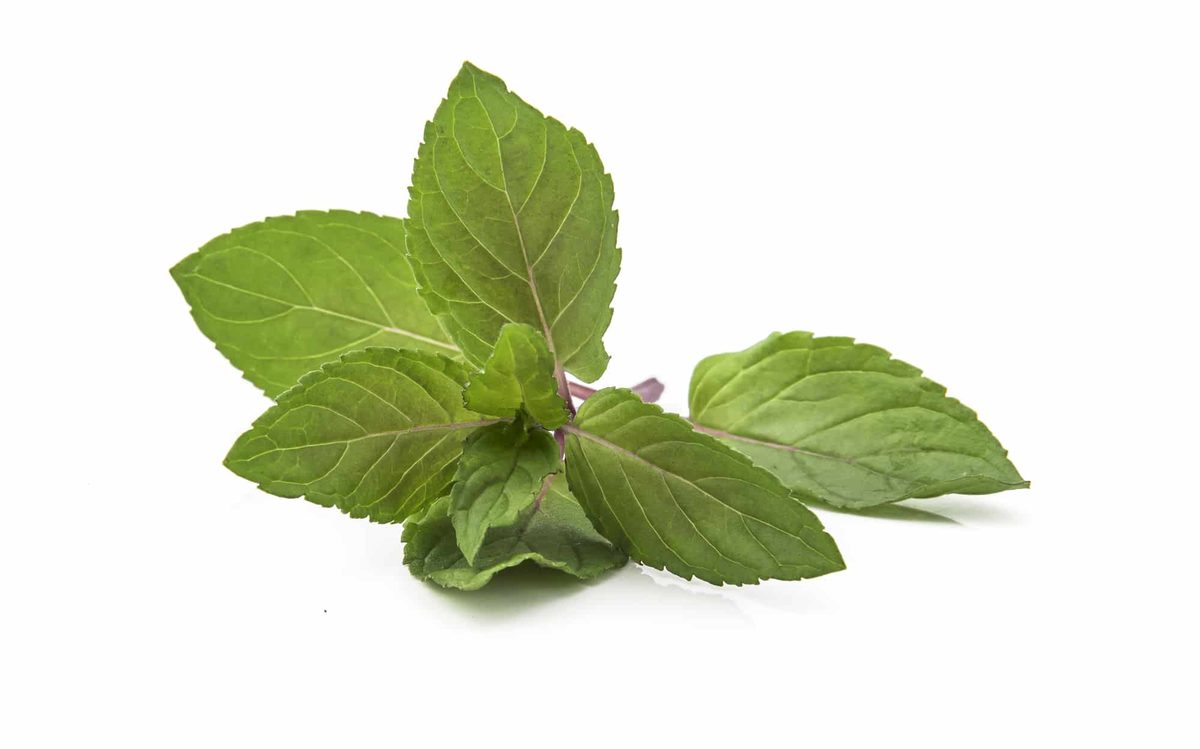
Chocolate mint is a garden mint grown for its scent: the Royal Horticultural Society describes its dark green leaves as minty-chocolate scented. It is not a separate species. The RHS lists it as a named form of peppermint, and you use it wherever you would use peppermint, with desserts and chocolate being the obvious fit.
At a glance
| Name used by the RHS | Mentha × piperita f. citrata ‘Chocolate’, common name chocolate peppermint1 |
| Plant family | Lamiaceae (mint family)1 |
| What it is | A cultivar (garden selection), not a wild species |
| Parent species | Peppermint, itself a natural cross of water mint and spearmint23 |
| Leaves | Dark green, tinged reddish-purple in sun or copper-red in shade, minty-chocolate scented1 |
| Size | Spreading perennial to about 50 cm tall1 |
| Hardiness | RHS H7, hardy in the severest European continental climates1 |
| Essential oil composition | No published analysis of this cultivar found |
What chocolate mint is
The RHS describes chocolate mint as a vigorous, spreading perennial up to 50 cm tall. Its dark green leaves turn reddish-purple in sun or copper-red in shade, and it bears dense spikes of tiny pinkish-purple flowers in late summer.1 The RHS files it under culinary herbs.1
Where it sits in the mint family tree
Chocolate mint’s name tells you where the RHS places it. Mentha × piperita is peppermint, which Kew records as a hybrid of water mint (M. aquatica) and spearmint (M. spicata), and which NCCIH calls a natural cross of the two.23 The RHS then puts ‘Chocolate’ within f. citrata, the same form it uses for eau de Cologne mint, the plant often sold as orange mint or bergamot mint.14
That classification is not universal. Kew does not treat citrata as part of peppermint at all: it lists Mentha × piperita var. citrata among the synonyms of water mint, Mentha aquatica.5 So the common claim that chocolate mint is related to orange mint holds in the RHS’s naming, and its relationship to watermint holds under Kew’s. We found no published genetic study of the ‘Chocolate’ cultivar itself, and no record of who selected it or when.
Flavor and aroma
Opinions on chocolate mint split. Some growers find a clear cocoa note in the leaf; others taste only mint. The RHS’s own description is of minty-chocolate scented leaves,1 which supports the scent at least.
What can’t be settled is why. A widely repeated argument says no compound in the plant could explain a chocolate note; we found no analysis of the cultivar’s oil either way, so that claim is untraceable rather than wrong. In cookery, Britannica notes, “mint” usually means peppermint or spearmint.6 By our own judgment, chocolate mint tastes like a softer, rounder peppermint.
Katzer’s observation that the freshness of peppermint goes extremely well with chocolate7 may be the most useful point for a cook: whatever the leaf contains, its natural home is next to real chocolate.
Origin and history
As a cultivar, chocolate mint has no wild origin to trace. Statements that it arose in Europe, Africa or Asia, or that it came to North America with early colonists, could not be sourced.
The genus has a long recorded history. Britannica counts about 25 species of perennial mint herbs.6 The Greek geographer Strabo records the myth that Minthe, the concubine of Hades, was trampled by Core (Persephone) and turned into garden mint.8 NCCIH notes that the medicinal use of mint plants for digestive problems goes back to ancient Greece, Rome and Egypt.3 The claims that Theophrastus named the genus and that Roman soldiers carried mint to Britain could not be traced. For more on the genus, see mint and types of mint.
How to use chocolate mint
Use it as you would peppermint. Common pairings are desserts and drinks: chocolate ice cream, puddings, custards and cookies, hot chocolate, mint tea and minty cocktails such as mojitos. These are cooking judgments, and Katzer’s point about peppermint and chocolate7 is the strongest reason to start with dessert.
Some handling notes that apply to mint generally:
- Add it late. LSU AgCenter lists mint among the delicate herbs that lose flavor and aroma with prolonged heat.9 For hot chocolate or custard, steep the leaves in the warm liquid and strain, rather than boiling them.
- Fresh versus dried. LSU’s general rule of thumb for herbs is that 1 tablespoon of finely cut fresh herbs equals 1 teaspoon of crumbled dried herbs.9 It is a general guide for herbs, not a figure measured for this cultivar.
- See cooking with mint, mint uses, how to store mint, how to dry mint and can you freeze mint. If a dish has gone over, see too much mint.
Growing and buying
By common practice, chocolate mint is bought as a potted plant rather than as cut herbs. The RHS gives a spread of 0.5 to 1 meter and rates it hardy in the severest European continental climates.1 Because the RHS describes it as vigorous and spreading,1 most gardeners keep it in a pot; that is common practice rather than an RHS instruction.
Health and safety
No study has looked at chocolate mint specifically. What is known applies to peppermint in general, and mostly to peppermint oil rather than leaves:
- NCCIH says very little research has been done on peppermint leaf.3
- Peppermint oil in enteric-coated capsules may improve irritable bowel syndrome symptoms in adults, according to NCCIH’s summary.3 That is a concentrated oil product, not leaves in a dessert.
- NCCIH describes peppermint tea as appearing to be safe, and says the long-term safety of consuming large amounts of peppermint leaf is unknown.3
Claims that chocolate mint is a meaningful source of vitamins A and C, folate, potassium or manganese, or that it relieves allergies, could not be traced to a source and are not repeated here. This page makes no claim that chocolate mint treats or prevents any condition.
Substitutes and comparisons
Peppermint is the closest substitute, since chocolate mint is a form of it. For a softer note, spearmint works. See mint substitutes, peppermint substitutes, spearmint vs. peppermint and spearmint. No source gives a swap ratio between mint varieties; start with equal amounts and adjust to taste (Method).
Footnotes
-
Mentha × piperita f. citrata ‘Chocolate’, Royal Horticultural Society. rhs.org.uk · Reference work ↩ ↩2 ↩3 ↩4 ↩5 ↩6 ↩7 ↩8 ↩9 ↩10 ↩11
-
Mentha × piperita L., Plants of the World Online, Royal Botanic Gardens, Kew. powo.science.kew.org · Reference work ↩ ↩2
-
“Peppermint Oil”, National Center for Complementary and Integrative Health, NIH, 2025. nccih.nih.gov · Regulator ↩ ↩2 ↩3 ↩4 ↩5 ↩6
-
Mentha × piperita f. citrata (eau de Cologne mint), Royal Horticultural Society. rhs.org.uk · Reference work ↩
-
Mentha aquatica L., Plants of the World Online, Royal Botanic Gardens, Kew. powo.science.kew.org · Reference work ↩
-
“Mint (plant)”, Encyclopaedia Britannica. britannica.com · Reference work ↩ ↩2
-
Gernot Katzer, “Mint (Mentha)”, Gernot Katzer’s Spice Pages. gernot-katzers-spice-pages.com · Reference work ↩ ↩2
-
Strabo, Geography 8.3.14, Perseus Digital Library. perseus.tufts.edu · Reference work ↩
-
“Flavorful Herbs”, LSU AgCenter. lsuagcenter.com · Reference work ↩ ↩2